Cold rolled or hot rolled, for a building in Wales
A steel frame is made one of two ways. The choice changes the price, the delivery date and what happens in the ground, and a Welsh site, with its wind, rain, salt air and narrow lanes, pushes harder on that choice than most. Here is how to decide.
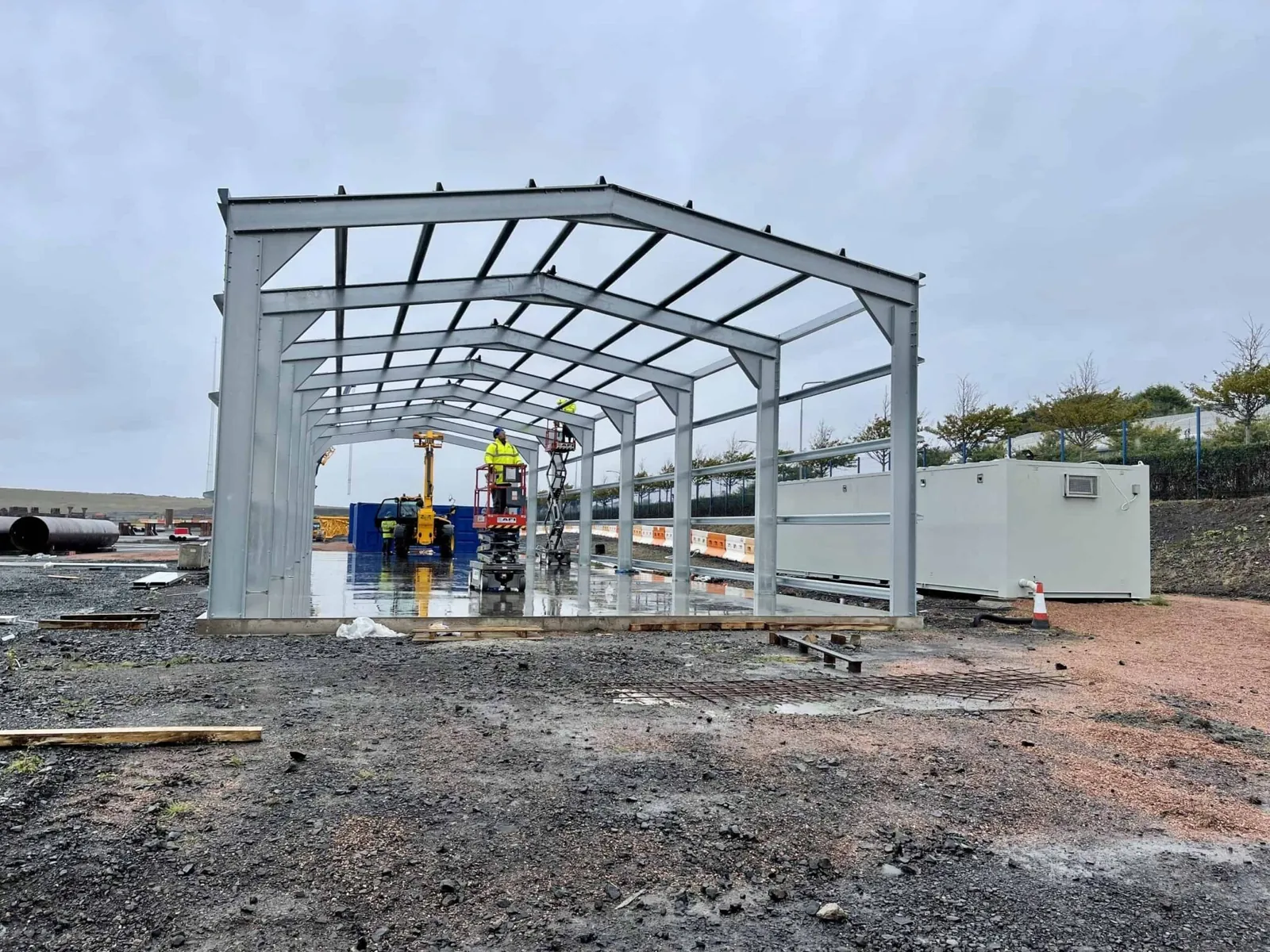
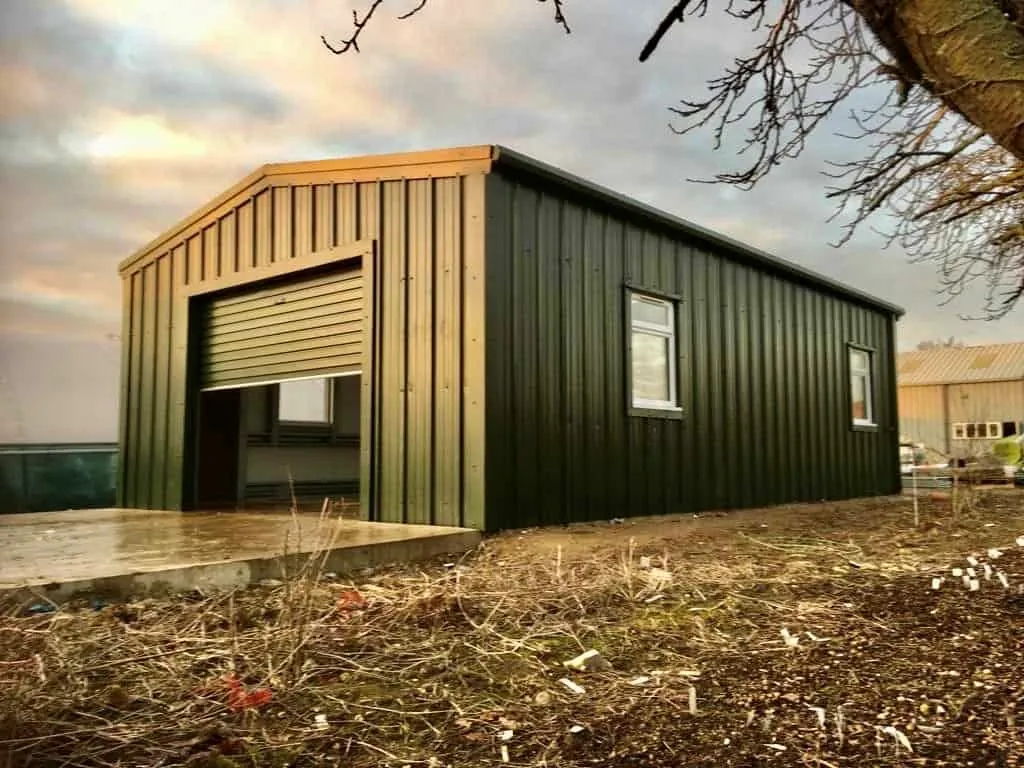
How each is made
Hot rolled
The steel is shaped while it is glowing hot into heavy I-section beams and columns. A fabrication shop cuts each member to length, drills it and welds on the plates, and it arrives on site as a set of made-to-measure pieces that a crane lifts into position. It is the older of the two methods and the one behind most of the big agricultural and industrial sheds in the valleys.
Cold rolled
Also sold as cold formed. Strip steel that has already been galvanised is run off a coil and folded, cold, into C and Z profiles. Brackets and bolts join them into the same portal shape as a hot rolled frame. Lighter to carry, coated before it leaves the mill and bolted rather than welded, it has moved from a novelty to an everyday option for farm and light industrial buildings over roughly the last two decades.
Either way you end up with a clear span portal frame, engineered, with structural calculations that should come with the quote. One is not a better grade of building than the other. What matters is how close each would be working to its limits on your site.
Side by side
| Cold rolled | Hot rolled | |
|---|---|---|
| Members | C and Z profiles folded from coated strip, bolted together | I-sections fabricated in a shop, drilled and welded |
| Best at | Stores, general purpose sheds, garaging, small workshops | Wide spans, heavy duty, hoists and gantries, very exposed sites |
| Protection | Galvanised at the mill, before it is folded | Blasted and painted, or galvanised, once fabricated |
| Delivery | Lighter bundles, easier on a narrow lane | Long, heavy members, and a crane that has to reach the site |
| Lead time | Generally the faster route | Fabrication adds time to the order |
| Over the years | Look after the coating and the cut edges | Heavier steel, and generally the longer-lasting of the two |
As a rule of thumb: a shed for keeping things dry and out of sight is very often a cold rolled job. Once it gets wide, carries real weight, or will ever have something lifting from the roof, you are into hot rolled, and a farm workshop with a hoist is where that matters most, because the frame carries the lift as well as the weather.
What a Welsh site asks of the frame
The standards engineers design to set the wind and snow a building must carry from where it stands: its location, its height above sea level and how open the ground is around it. The same drawing is not the same building on the Vale and on the tops above the Heads of the Valleys, and that is where the choice between the two methods gets decided.
Wind
The west of Britain takes the Atlantic weather first, and a great many Welsh farm buildings are put on the top of a field with nothing between them and it. A cold rolled frame can be designed for a lot of wind, but the more it has to take, the heavier its sections get and the more of its advantage it gives up. On a very exposed site, compare like with like: both frames designed to your site's wind, not to a standard brochure figure.
Salt
Near the sea, whether on the Gower, the Glamorgan coast or much of Pembrokeshire, salt in the air eats steel faster than inland. The protection has to be chosen for that. Galvanising and paint systems come in grades for different environments, and the weak points are the places the coating is broken: cut ends, drilled holes, fixings and anywhere a bracket was trimmed on site. Ask what grade of protection the quote assumes for your distance from the coast.
Snow
Snow loads rise with height above sea level. A shed on an upland farm in the Bannau Brycheiniog or the hills of Carmarthenshire has to be designed for more snow on the roof than the same shed by the coast, and a light frame at the edge of its range feels that first.
Getting it there
Hot rolled rafters for a wide building come as long, heavy pieces, and they need a lorry that can get up the lane and a crane that can set up within reach of the pads. On farms reached by a single-track road with tight bends that is a real question. Cold rolled arrives in lighter bundles and goes together with smaller plant, and sometimes that settles it.
How the choice reaches the foundations
This is why a site about groundworks has a page about frames at all. Which frame you choose changes the pads it sits on.
Less steel puts less weight on each column base, and on a sheltered site with good ground that can mean smaller pads and less concrete. Some sellers make a point of it, and in the right place they are right.
Held down, not held up
The pads under a light frame are often sized to stop the wind lifting it rather than to carry its weight. On an exposed Welsh site that can leave them no smaller than a heavy frame's, and now and then bigger.
So the lighter frame does not automatically mean the cheaper base. What decides it is the wind the frame was designed for, which is one more reason to ask. The engineer's design sets the pad sizes for either frame, and they come with your drawings. The rest of the base, from the topsoil strip and the level to the stone, the slab and the spoil, depends only on the size of the building and the ground, and the groundworks calculator will give you the quantities now.
Putting it up yourself
Either kind can usually be bought delivered for your own people to erect, or supplied and put up for you. Cold rolled makes doing it yourself far more practical, because the members can be handled without a crane on hire for the week and nothing needs welding.
Weigh it honestly. Supply-only saves money when you have the hands, a telehandler and a couple of dry weeks to spare. When the steel ends up lying in the yard through lambing and silage because nobody had the time, the saving goes. Get both prices and decide against the year you actually have ahead of you.
Eight questions for any supplier
- Is this frame cold rolled or hot rolled, and why that one for this building?
- What span and eaves height is your standard frame designed for, and how close am I to that?
- What wind and snow loads is it designed for, and do they reflect where my site actually is?
- What protection is on the steel, and is it right for my distance from the sea?
- Do structural calculations come with it, fit to go with a planning application?
- Is a foundation drawing included, with the pad sizes on it?
- Can your delivery and your crane get up my lane, and what is the lead time in writing?
- Is this supply only, or supplied and erected?
A supplier you would want to buy from answers all of them readily. The answers are also what turn three quotes into three prices for the same building, which, more often than not, they were not.
Questions people ask
- What is the difference between cold rolled and hot rolled steel buildings?
- The way the steel is shaped, and everything follows from it. Hot rolled members are formed while the steel is red hot into the deep I-sections most people imagine when they think of a steel frame, then cut, drilled and welded in a fabrication shop. Cold rolled members, sometimes called cold formed, are folded cold from thin galvanised strip into C and Z profiles that bolt together. The cold rolled frame is lighter, comes already coated and goes up with spanners. The hot rolled frame is heavier, stronger, and usually needs a crane and a paint or galvanising system.
- Is cold rolled or hot rolled better for a farm building in Wales?
- It depends on the building and the site rather than on one being better. Cold rolled is a strong choice for modest spans and lighter duty: stores, general purpose sheds, garaging and small workshops. Hot rolled earns its place on wide spans, heavy loads, anything with a hoist or gantry, and exposed sites where the frame has to resist a lot of wind. A building close to the line between the two is worth having priced both ways.
- How wide can a cold rolled steel building span?
- Suppliers commonly advertise cold rolled frames to around 18 metres of span with eaves at roughly five metres, and engineering research has taken cold formed portal frames further. The useful question is not the maximum but where the frame stops being economical. Near the top of its range a cold rolled frame needs heavier and more numerous sections and its advantage goes. Ask what span the supplier designs its standard frame for.
- Does a lighter frame mean smaller foundations?
- Sometimes, and not on every Welsh site. Less steel means less weight on the pads, which can mean less concrete. But the pads under a light building are often sized to stop wind lifting it, not to stop it sinking, and on a hilltop in the valleys or a field above the Pembrokeshire coast that uplift can make the pads as big as a heavier frame would need. The engineer settles it, and the pad sizes come with the drawings.
- Which one copes better near the sea?
- Either can, if the protection suits the site. Salt spray attacks steel faster than inland air, so a building on the Gower, the Vale coast or in Pembrokeshire needs a coating specified for that, and cut ends, bolt holes and fixings are where it goes first. Cold rolled sections carry their galvanising from the mill; hot rolled members get theirs, or a paint system, after fabrication. Ask each supplier what protection they have allowed for your distance from the sea, and get it in writing.
- Which arrives sooner?
- Usually cold rolled. Folding standard profiles off a coil is quicker than fabricating a hot rolled frame, and suppliers often advertise turnarounds of a few weeks for cold rolled buildings. If the building has to be up before lambing, silage or the start of a lease, get the lead time from both routes in writing and weigh it alongside the price.
Have your building priced both ways
Give us a rough span and length, say what it is for and where the site is, and ask to see both routes. You get engineered drawings and a price with the pad sizes on them, and the base underneath already worked out.